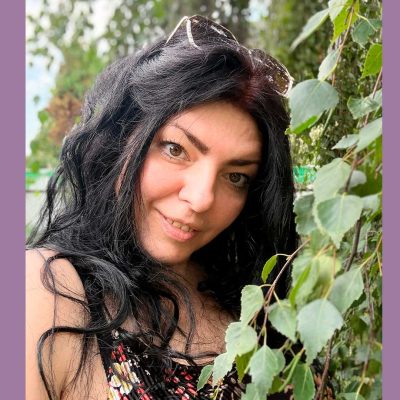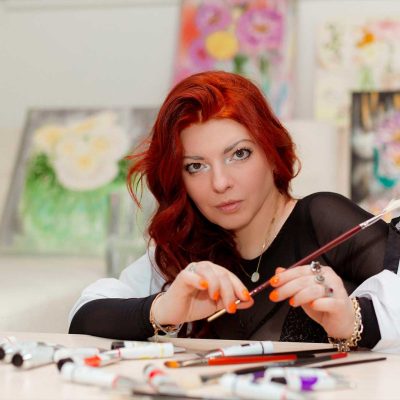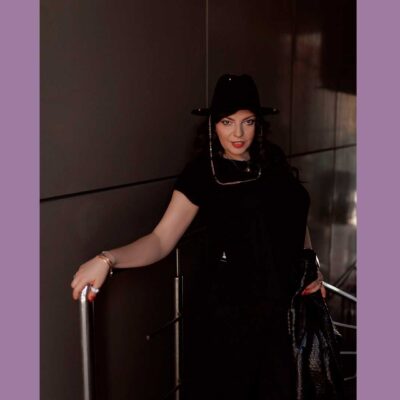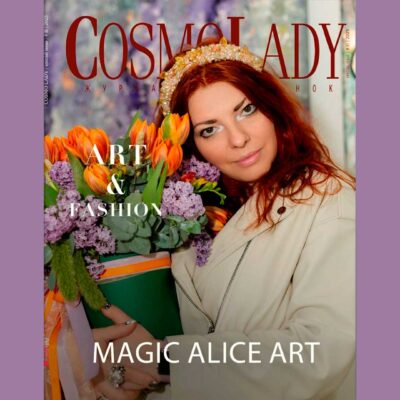
Profiling: Ilona Rukobratska — an icon of photo style in Ukraine
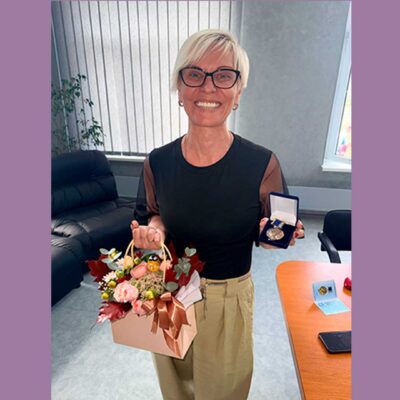
Beautiful, stylish and gorgeous photos for Instagram, Facebook, portraits and festive events — not a whim, but a reality (and for the guest of my interview even a fabulous everyday life)! Yes, this is the professionalism of the work of a high‑level specialist, a wonderful person and an incredibly talented woman. She is already informally called in Kyiv (although she is not from Kyiv) an icon of photo style by leading companies, founders of media projects and stars, because she began to set a high bar of standards and requirements for photography in Ukraine. Thanks to her work she became a person whom representatives of Kyiv’s beau monde trust with their image. So I suggest you get to know her personality a little more in detail, immerse yourself in her inner worldview, because a conversation with Ilona Rukobratska is always interesting.
Profile: life‑affirming, strong and active position, charisma of a leader who works only on effective directions (after analyzing their prospects) and makes all projects she is engaged in effective.
Ilona is a strong and systematic person. Very smart (her mindset is deductive, rational, sometimes radical and rather sharp). Emotionally turbulent and inclined to restrain herself in order to remain a strategist (she succeeds very well and naturally brightly).
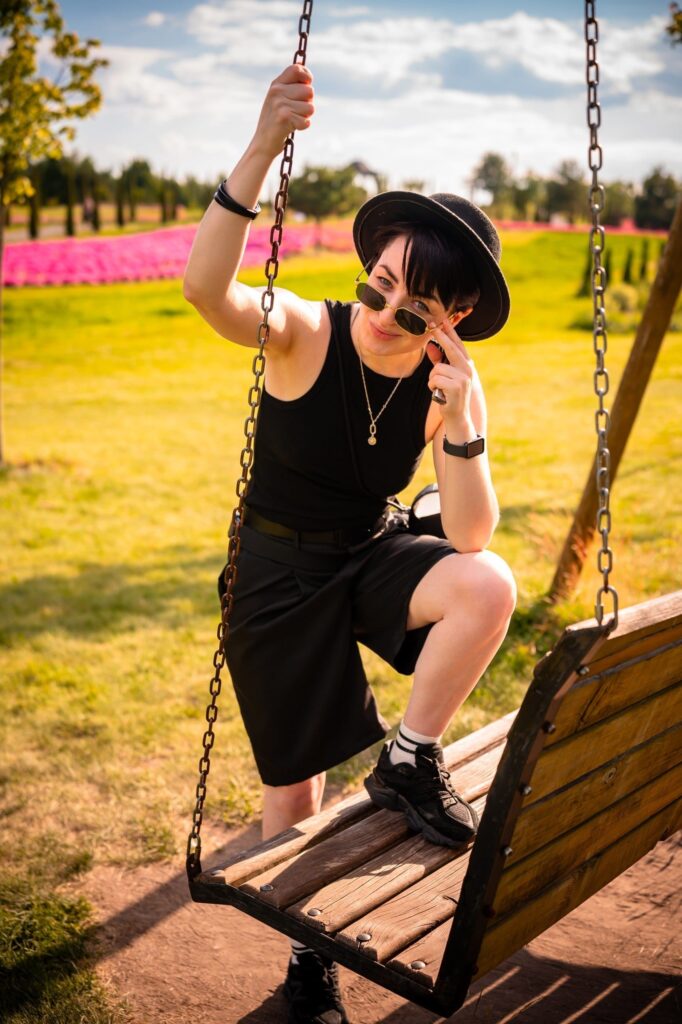
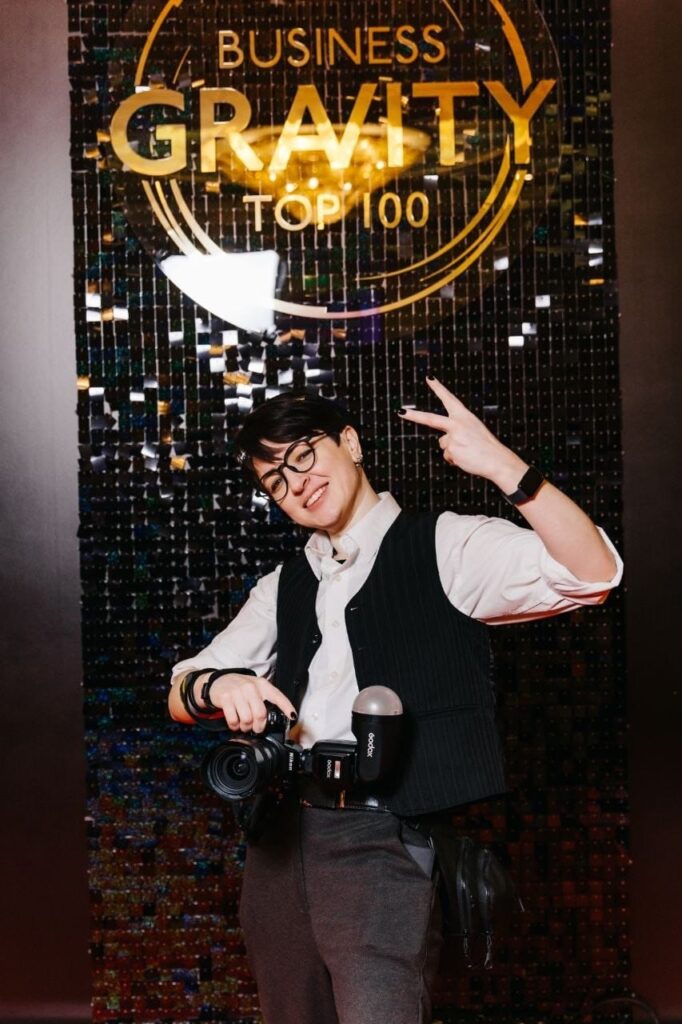
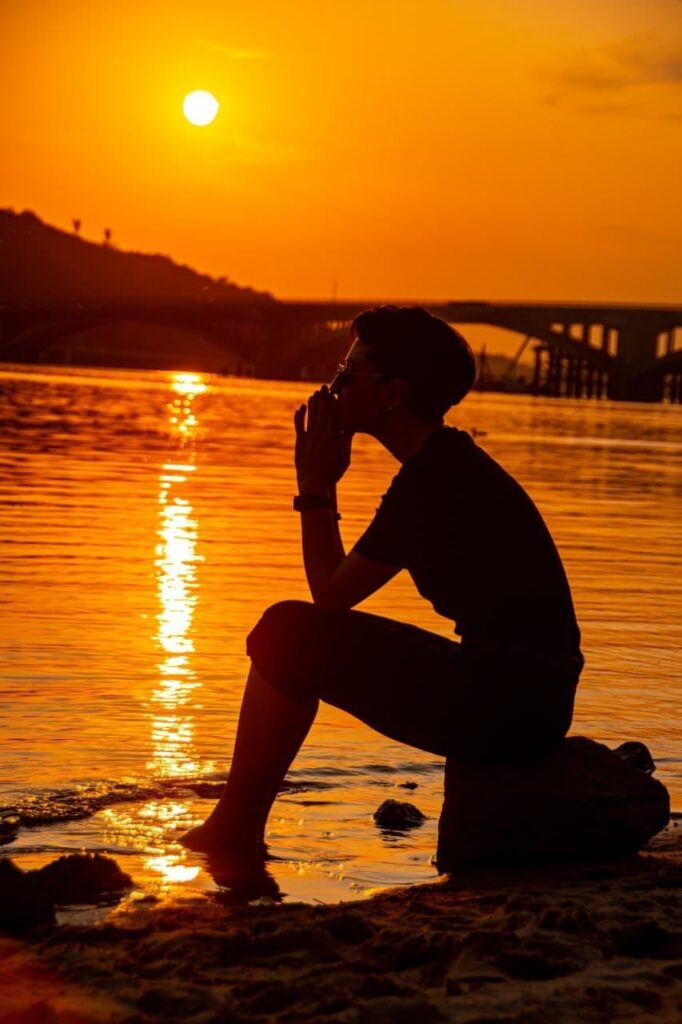
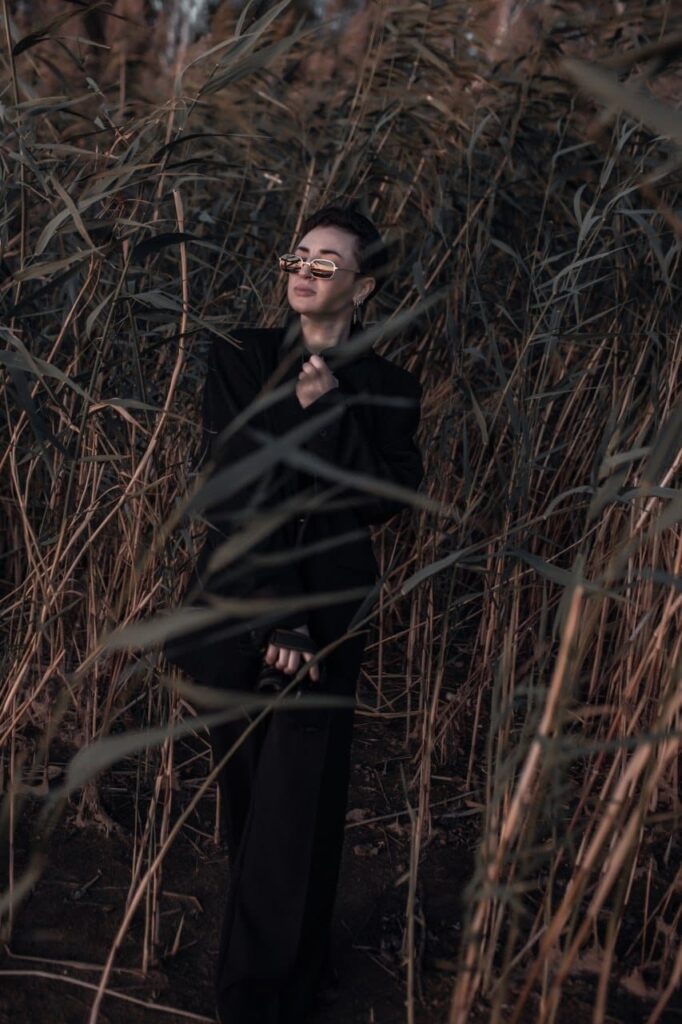
With her it is never boring, sad or passive‑aggressive (like with some photographers who simply do not love their work, people and communication at all). Because in moments of problems (which life throws at us from time to time) — there will be such humor and support that anyone nearby automatically pulls themselves together and is unable to “hang their nose.” She feels the state of a person with her heart. She pays attention to details that have key significance. She knows how to notice the invisible to the eye.
Inclined to risks and a creative approach at the same time — a photo session with her will not be trivial and everyday routine for you, for her, for the viewers of your photo works later. It will be accentuated life, which you will soon see in your photos.
A loner in work, a loner in life (the main support — herself, even if in love to distraction), she always stimulates personal experience to growth. Not an egoist. Knows how to give her all. Always gives mutual return to constructive relationships.
A holistic nature (combines personality and professional very harmoniously). Never gives up. A brave intellectual (with an emphasis on calculation of details). Has at the core a masculine type of mind, even masculine dedication, but feminine care and heightened sense of responsibility.
Values every moment she lives. Frank and self‑sufficient, a harmonious personality with strong working through of her psychological weaknesses (to throw her off balance is very difficult, although she will be very hurt by disrespect, rudeness and lack of culture of a client or opponent).
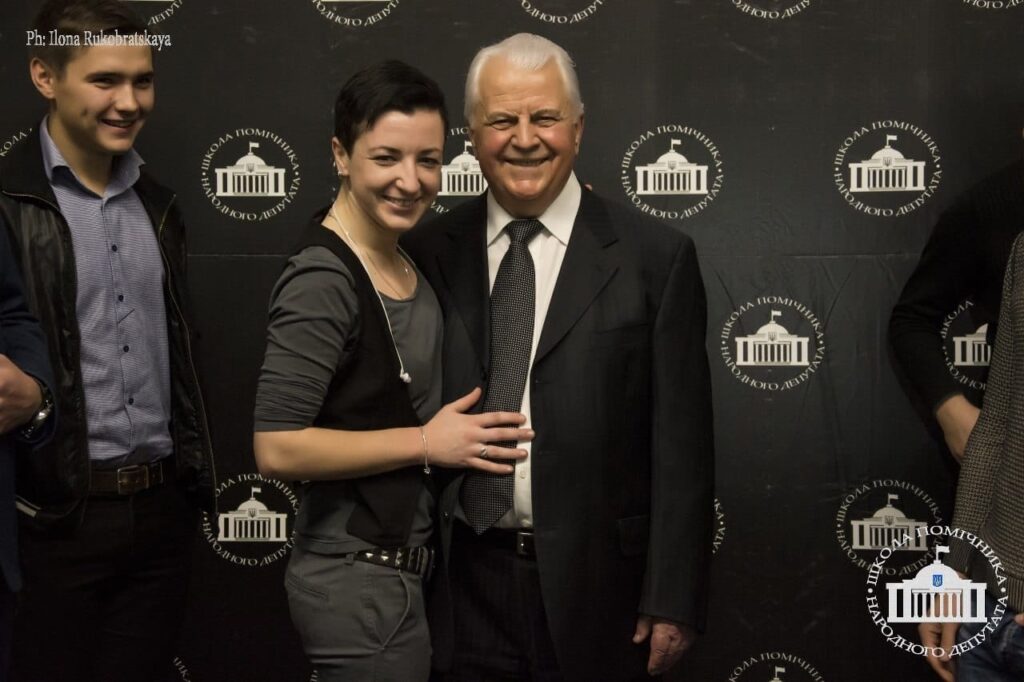
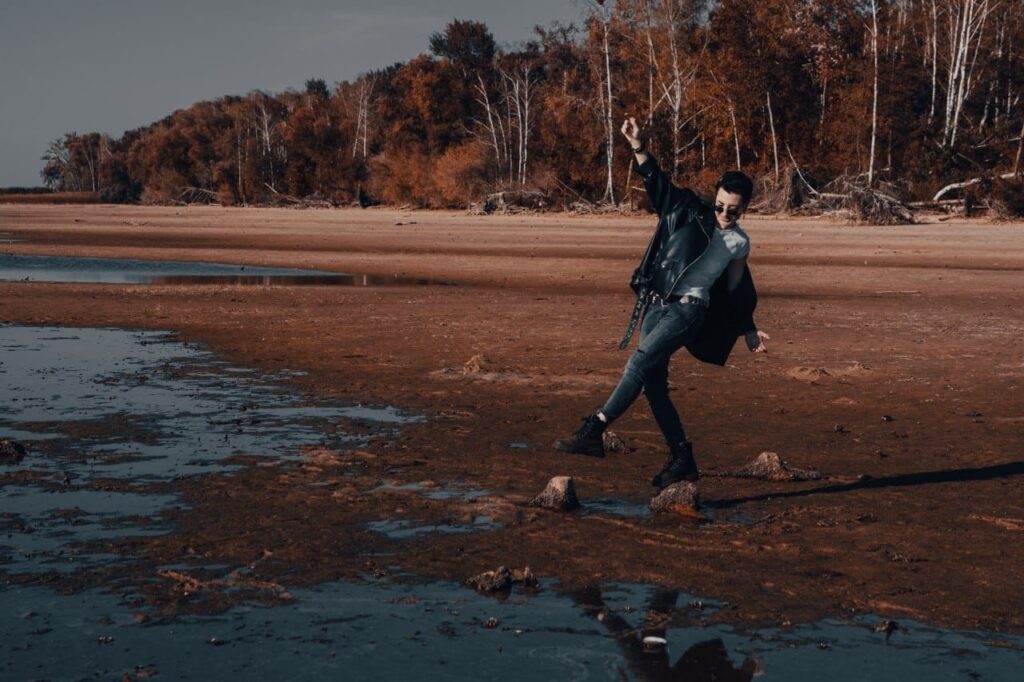
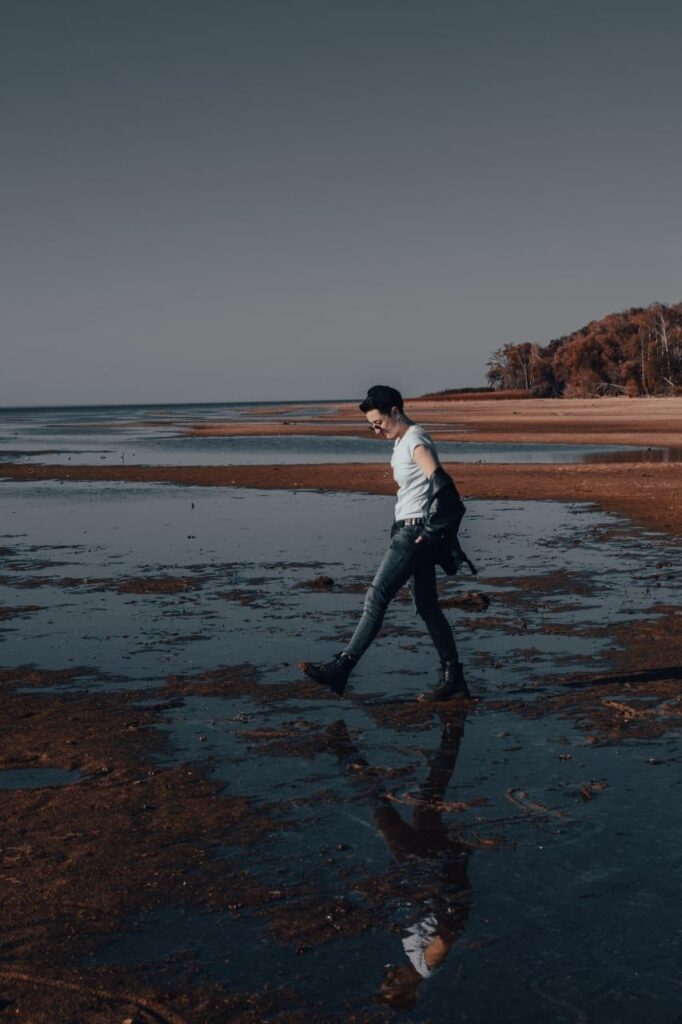
If she doesn’t like something, she will say “no.” And she will not try to “please” and get the result for herself. Easy‑going, friendly, straightforward (sometimes even too much). An “unstoppable generator of work” and a true artist! A high‑level professional.
Capable of deeds (has the hero marker in Profiling — this is exactly that marker when a person selflessly acts in emergency situations with risk to personal life), at the same time knows how to appreciate beauty and is grateful for moments of happiness in life. She always smiles at challenges, and everything turns out for her in the best way! She is a workaholic. Kind, wonderful friend, support (for those she cares about) and business partner. Painfully reacts to betrayal. Does not forgive meanness. I am proud of our acquaintance!
— Ilona, congratulations! I am so grateful to you for the time given for the interview! I know you have a lot of work, clients and a complete overload! Despite this, I even brought you back from vacation!
Tell me why… or let’s put the question differently: what is the main goal of clients who order photo sessions? Is it relationships? Search for relationships? Instagram? Advertising? To be in trend? What is the motivator? Tell me about your client (profile of the person, your client).
— Most of the people who turn to me are businessmen, stars, politicians, singers, actors and people who want to see themselves in a new way — beautiful, from my point of view. They do not have a single profile or scenario: requests are different — from business portraits and advertising to photos for social networks, gift shootings or publications. They are united by the fact that many do not know how to pose, but want to look natural and dignified. My task is to make sure they are satisfied, regardless of the platform where these photos will appear.
— How did it all start? Why photography?
— When I was in my fourth year at university, studying economics, and I have a master’s degree in enterprise economics. It was then that my mother gave me a camera. One of my acquaintances, who was engaged in creating websites, was making a site for a hotel in Dnipro and asked me to take photographs of the hotel. I honestly said that I did not yet know how to photograph professionally, but I had a new camera, so I could try.
I shot the material, gave the photographs to the clients and… they really liked everything. This impressed and delighted me so much that, being a student, I realized: besides the profession of an economist, there is an opportunity to become a photographer. Then photography became truly interesting.
I began to study on the internet how photographers work in Kyiv and Ukraine, how they live, how they shoot and whether photography can become a profession for life. To be honest, after reviewing a lot of information, I realized that photographers in Ukraine at that time earned little and this profession seemed more like a hobby that brings pleasure than a way of earning. But in my case everything turned out much better than I expected, and photography became my main profession.
— Your very first camera, where is it now?
— My first camera was the simplest Nikon, I think 5100. It didn’t even shoot video. Now it is already a rare, retro camera, which I keep as a memory. It still works and it could be used to take photographs, but I no longer use it because my modern camera gives a completely different quality. But it is the first and unforgettable valuable thing.
— How to check the quality of photo works (for an ordinary citizen)? Special processing? Cool equipment? What is key and what is paid attention to?
— For an ordinary citizen the quality of a photo is easiest to check like this: enlarge the image. If it remains sharp, does not break into pixels, colors do not “float” and there are no artifacts — this is a good sign. It is also worth paying attention to how the photo looks after compression in messengers or social networks. It should remain pleasant and readable.
— Do you do business photo sessions? What key directions are popular now?
— Business photo session is one of my main directions of work. And probably the most important in such shooting is to correctly understand and reflect the wishes of the client.
Very often people turn literally with one phrase: “I need a photo session.” And then I begin to ask questions: what is it needed for? Where will the photographs be used? What exactly does the person want to show with them? In what style does he or she see themselves? Maybe they already have examples of photographs they like.
If the person has not yet decided, I help them form this image literally from scratch. We discuss the concept together, select the wardrobe, if necessary involve a makeup artist and a hair stylist, and necessarily select suitable locations.
Regarding current directions, today especially in demand are shootings for personal brand, social networks, websites and advertising campaigns. These can be business portraits of entrepreneurs and managers, image shootings of experts, content for Instagram and other platforms, corporate portraits of the team, as well as advertising photo sessions for companies, products and services.
But it is important to understand that business photography is not just a beautiful portrait. Photography must perform a specific task: present a person as a professional, inspire trust, form a certain image or help sell a product or service. That is why I always start not with the camera, but with questions to the client.
Usually for a business photo session I recommend two or three different looks. If possible we use different locations, change clothes, hairstyle, makeup, accessories — even small details can completely change the impression of the photograph. This way the client receives diverse material that can be used for a long time.
I do not recommend making too many looks. It is very important not to overload the person. If constantly changing clothes, locations and photographing for too long, the client gets tired, and this immediately shows in the emotions in the frame. And for me it is important that the photographs remain alive.
This is especially relevant for people who have little experience in photo sessions. I very often hear: “I don’t know how to pose,” “I don’t know what to do,” “I don’t know how to stand, where to look, where to put my hands.” And this is absolutely normal. Therefore I set aside a certain time for the person to get used to me, to the camera and to the process of shooting itself.
During the photo session I literally prompt everything: how to stand, how to sit, where to put hands, where to look, how to turn the head. My task is to make sure the person does not think about how they look in front of the camera, but gradually relaxes and simply is themselves.
I work with light and select it according to the task of the shooting — I use studio or natural lighting. And when the main part of the work is already completed and there is time left, I like to add a few shots with live emotions. Perhaps they will not go directly into the work, but it is a pleasant bonus for the client — photographs that one simply wants to keep.
I generally do not like to limit the client with a strict number of shots. If there is time and opportunity to make more quality photographs, I shoot more. It is important for me not just to fulfill the order, but to give the person a choice.
As a result, a business photo session is not just shooting. It is comprehensive work on the image of a person and their visual presentation. And the best result is when the photographs not only fulfill their business task, but the person themselves likes them so much that they want to use them, print them and keep them as part of their own story.
— Incredible! Very cool that the client has the opportunity to get a full wish list of the shooting!
Tell a little about the equipment! If readers wanted to become photographers, what should they buy?
— At first even a phone is enough. The main thing is to understand the basics: light, composition, simple settings, shutter speed, aperture and ISO, which are everywhere. And then, if desired, one can move on to a professional camera. But the ability to see the frame is more important than the equipment. And it develops gradually and for free.
— Do you teach photography, conduct courses or master classes?
I had experience teaching photography in higher educational institutions, but I refused, because it takes a lot of time and energy, which I do not have now for teaching. There were several individual courses when people asked me to teach, but this is rather an exception than a regular practice. There were also several master classes individually, when I was strongly asked. But this too is rather an exception, not a regular practice.
— What shootings are the most difficult?
— The most difficult shootings are large‑scale events: concerts, “Eurovision,” beauty contests, award ceremonies. There the light constantly changes, people move and one needs literally in seconds to orient by the light, catch the right moment and make a group shot so that everyone looks into the camera and no one blinks. Separately difficult are shootings of children and animals.
— And how do you manage it?
— Coping with this is helped by many years of experience. All this did not come in one day: there were mistakes, there were difficult shootings, which I then analyzed and thought how to do better. If I did not know something, I searched for information on the internet and worked on my mistakes. Therefore now I know how to act, because I have already worked it out in practice.
— What interesting projects have you launched? Why exactly them?
— One of my big projects is “Woman of the Third Millennium.” I photographed many participants — successful women from different fields. I shot them in studios, and also traveled to other cities. After the shootings we selected good portraits, which at the same time were also business photographs.
In the project there was a photo exhibition — portraits were printed on canvas. There was also a large printed photo book with photographs and interviews of these women. All this was accompanied by an award ceremony.
I like to participate in large‑scale projects, because they show people that success can be achieved thanks to work and effort. In the book one can read the success story of each woman and take certain useful lessons.
I am also an assistant to a military chaplain and take part in charity events, where I work both as a photographer and as a videographer. Recently we made a video clip for the spiritual anthem of Ukraine.
— Tell about the most extraordinary photo session in your life, a funny or amusing story.
— In my life there have been many extraordinary photo sessions and funny incidents on shooting sites. But an interesting adventure happened at the beginning of my career, during the photo project “Parallels,” where I photographed stars in fantasy images.
We with Nadiya Meikher‑Granovska went to the forest for a photo session. And I did not think everything through to the end — we did not take flashlights or additional light. And in the forest it is dark, there is no civilization around. Nadya was in high heels, jumping over pits, and we were walking to an old half‑ruined house.
On top of all this… we also brought a horse from the stable of my friends. And so we needed in complete darkness to prepare the location and understand how to conduct the shooting at all. We lit a bonfire to see what was happening around.
I mainly work with flash light, and for lighting the darkest forest it, of course, did not help much. But for photography it worked wonderfully — the shots turned out very beautiful, the result really cool.
All this we did practically on improvisation. And there are many such stories — just cannot recall all at once.
— Are there dissatisfied clients? It is clear that dissatisfied (sometimes even ungrateful) people can meet anyone and this is normal. More interesting is how exactly you resolve such situations?
— This also happened, but rarely. Often the reason is that the client comes to the shooting, she wants something, but cannot explain what exactly. When I start asking questions, a certain image is formed of what she would like to receive.
Then, when she receives the photographs according to our agreements, already seeing the result, she may say: “And maybe we would better do it like this.” That is, she wants additionally to see herself from different sides, to try something else. In such a case I try simply to talk and explain that the work was done qualitatively and according to our previous agreements.
There was a case recently when I lost all the photographs from a photo session. I very nervously searched for a way to restore them, even sent the flash drive to a recovery center, but even there they did not help. The flash drive burned out, and the photographs were gone.
I honestly wrote to the client that due to technical reasons there are no photographs. She reacted very normally and adequately. I offered her simply to do another photo session free of charge.
— What is your hobby?
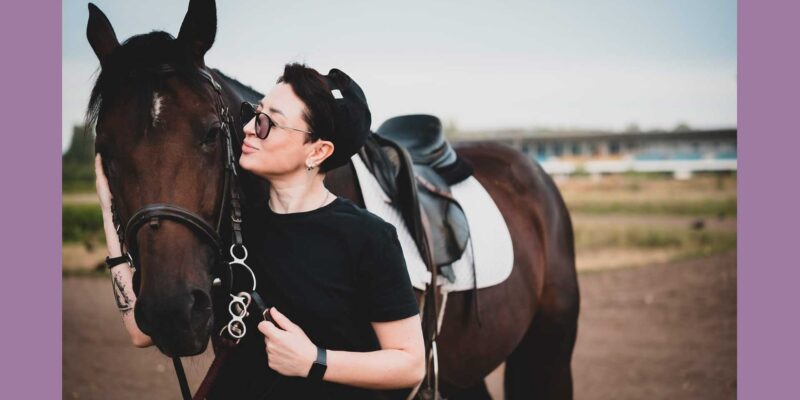
— My hobby is horseback riding.
— You know, they say that people who love horses are frank and very faithful. Not those who are forced to deal with horses, but those who are truly passionate from the heart!
— I love riding horses, but I haven’t done it for a very long time, because now I don’t have time. Also my hobbies are shooting with real weapons, fishing, cars and traveling.
— Do you give people advice about image? You see them professionally?
— Yes, definitely. If I am asked, I give advice about image and help create it: clothes, accessories, hairstyle, makeup, location — all this, of course, I help to think through and put together into a whole.
— Do you have many friends?
— Over the years my circle of friends has decreased, and now there are not many. There are many acquaintances, but few friends, because I am very careful about this.
— Yes. I understand and respect this position. How has the war changed you? Has it become harder to work?
— With the beginning of the full‑scale invasion I was persuaded to go to Poland. For two years I lived in Krakow, then returned to Kyiv, because I consider Kyiv my home, even though I am not local.
How has the war changed me? It changes everyone. I became an assistant to a chaplain. I contribute to victory: with my own methods, ways and opportunities to support the Armed Forces of Ukraine.
The hardest thing is being far from relatives. My relatives, my whole family remained in occupation. They cannot leave, and I cannot go there. Therefore we have not seen each other for more than five years and most likely will not see each other in the near future. This is the hardest.
— Have you done exhibitions of your works?
— Yes, I had personal exhibitions. These were “Parallels” and “Parallels 2.” “Parallels” is my first photo project, from which I began my career. In it I photographed stars in fantasy images and showed their alter ego — who they feel themselves to be in a parallel world.
— Pure Profiling! I had a similar project, where I wrote alternative paths based on potential inclinations for women — cosmonauts of the world. The EU published a huge book, definitely in Ukrainian, maybe also in English. And what other projects?
— There was also the photo project “Oberih.” Within the shooting of the clip “Oberih” we made a photo exhibition of stars who sang this song. At the same time there was the presentation of the clip and the photo exhibition.
Another photo exhibition — the project “Woman of the Third Millennium.”
Within the framework of the World fight against homophobia and violence together with KyivPride — a photo exhibition of stars who spoke out against violence.
— The next question is about… nude photo session. What experience and attitude do you have toward such shootings?
— Yes, I have experience in nude photo sessions. I rather adhere to such a rule: materials from shootings I do not publish and do not exhibit without the client’s permission. Some such photo sessions I do not publish at all — I simply shoot, process and give the photographs to the client. And what she does with them later, when and where she exhibits them — this is her personal matter.
For me a nude photo session is an individual and personal story, therefore I try to adhere to culture, delicacy and caution.
An interesting point, many girls in nude photo sessions feel calmer precisely with a woman photographer. Because a male photographer may behave incorrectly during shooting or incorrectly interpret the female body, showing sexuality too vulgarly. Women photographers in this respect often create a feeling of greater safety and try to show the female body more from an artistic, aesthetic point of view.
— The person who is being photographed, whom does they feel on the other side of the lens — a partner or support?
I think that the person who is being photographed by me feels on the other side of the lens a friend, who will prompt, guide and do everything so that the client has good photographs, and the process itself is easy, fun and relaxed.
I really love moments when people truly feel relaxed with me, and then at the end of the shooting say: “God, how easy it was with you! I didn’t feel at all that we were working.” We can just joke, I prompt how better to stand, and the person simply enjoys the process. And at the end they say: “Thank you, there is no fatigue at all, and you don’t even feel that it was a photo session or work — we just pleasantly spent time.”
— Do love, stress, bad mood or other emotions affect your work? How and why?
— Yes, I am a living person, and I have a different spectrum of emotions, different moods. But during the shooting process I try to abstract from the unnecessary and simply do my work well.
— This is professionalism, but still…
— It has happened, and more than once, that I go to shootings in a bad mood, I can even cry on the way. But then I arrive at the shooting — and that’s it, I get distracted, start working and all unnecessary emotions disappear. It is important at that moment to concentrate and do the work well.
— How do you cope with stress?
— I cope with stress with deep childlike sleep, if possible, walks with my beloved dog Jessy — a French bulldog, trips to nature. Here hobbies are added: to go fishing, to rest or to go out with friends to a country house. All this helps me relieve stress.
— What key principles guide you now? Considering experience and in general? You are a star of photography in the country, this is not an exaggeration, but it really is so. Your advice to our readers?
There are many.
Quality — above all. I want the person to receive a result that they will truly be satisfied with.
Every person has the right to see themselves beautiful. I strive to show the person as I see them.
Professionalism — is not only technique, but also the ability to work with a person.
Not to be afraid of new things. I constantly develop, master new technologies and use artificial intelligence as a tool of creativity.
Naturalness will always be relevant. Modern photography is not about changing a person beyond recognition, but about emphasizing their best.
One must remain oneself, but constantly become a better version of oneself.
Creativity must bring benefit. Photography is not just a beautiful shot, but an opportunity to create for a person an image, a memory, advertising or new opportunities.
If already doing — then as well as possible. A half result does not suit me.
The person is more important than the trend. Trends change, but personality remains.
One must look forward. What today seems new or unusual, tomorrow may become the standard.
And if one main thought is needed that unites all this:
“I want not just to photograph people — I want to help them see their value, reveal themselves and leave behind an image they will be proud of.”
— Thank you, Ilona! An incredible conversation, carried out in one breath!
Let’s hold on! Everything will be fine!