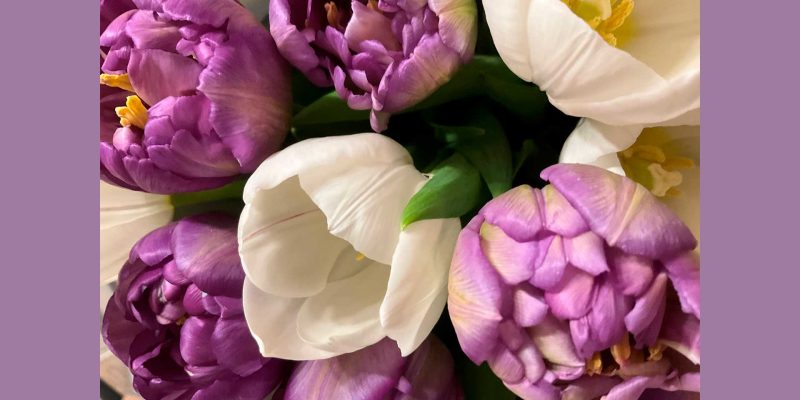
Profiling: Will you give a bouquet of flowers to your girlfriend or your mother?
People online are outraged: “Why the bouquet for the mother? Why does he humiliate the girlfriend by not choosing her? Why not give the bouquet to his beloved girlfriend instead of his mother? His mother is family, and the girlfriend is chasing money… and she’s right to do so!” — and so on.
As you can see, the most popular answer chosen by the young man is: “Of course, to my mother! She raised me!” And if he has “enough sense,” he adds: “there can be many girlfriends” (which is a direct insult and disrespect to his partner). However, there are also cases where the young man chooses the girlfriend. And then people write: “What about the mother? Are you sure this girl deserves it? Just buy flowers for your girlfriend, and give these to your mother! The mother is the priority! Well done, but your mother is no longer your family and won’t give you children!” — and so on in the same style.
Social media enthusiasts, after seeing this scenario, ask their real partners at home and get an answer. That answer offends either the mother or the girlfriend. Because, by default, the choice must put someone first. And the one who ends up second feels hurt.
There is a mindset that strengthens relationships in such provocations. Yes, you heard that right. A mindset of systematized communication. And by mastering it, you will never find yourself in a secondary position, even when you are not the one chosen.
Step by step, provocations must be overcome and conflicts resolved before building any more or less stable and clear relationship. And before you personally give your own answer to this rather simple question, let’s look at it from all sides, relying on Profiling — namely, the Profiles of the participants in the event.
Profile of the girlfriend’s behavior
So, you are a couple. What’s important is that a couple must have stable values in their relationship. Because this is necessary and essential. Without fundamental foundations, you are simply two separate people spending time together, adding variety to each other’s lives.
The basic criteria of a relationship are:
— Respect for each other’s views and interests. What do I mean? Respect for hobbies, passions, acceptance of a partner’s weaknesses (which, of course, you are ready and able to tolerate, since they are truly minor, and you honestly acknowledge them without deceiving yourself). For example, Saturday workouts at the gym without you. If he has been training for six years before meeting you and is used to it, neglecting this habit will negatively affect the relationship (subconsciously you will be blamed in his perception) and his physical/emotional state. If he chooses you (skipping training), let it be his choice, not your pressure. Another example: you are used to running alone on Saturdays and are not ready to change that because your well-being depends on it. Changing the time/day or skipping a run — that’s your choice (not a concession, not a sacrifice, not a restriction — but a free choice). And when he dictates conditions — that’s pressure and demand. It is perceived as abuse. That is definitely not a healthy relationship, without respect and with a hint of domination, exploitation, or manipulation. Nothing good comes from that.
— A healthy distribution of values in the relationship. This is when he works more than you would like, takes care of utilities and food, does things that are harder for you to do alone. Work for a man is the main theme. Not the most important, but the main one. It is his status. His “face.” His completeness. Respect from you for his busyness is extremely important to him. For you, the priority is safety and care (when children appear — then children and care for them). This requires time, you get tired and also work. He must respect, and you must respect. Both must support each other, covering the rear in these priorities. But the groups of values remain the same for both of you, and this keeps the relationship strong.
A healthy priority of values is embedded in each person from the start and additionally formed in each couple separately. Yes, you understood correctly. Partners change in relationships, doing important things for each other (even things they never did before meeting). And this is the main value of a couple. Coffee for a loving girlfriend at four in the morning is perceived by him not as her whim, but as pleasure and care from him, her man. Likewise, dishes washed by the husband — to make it easier for her.
— Actions. Actions show you the state of the relationship. You need to travel — he takes vacation and supports the household. He needs time for his dissertation — you take on the main responsibilities for a while. This turns into care. You feel unwell — he buys medicine and your favorite flowers. He is sick — you prepare chamomile tea and hug him more often. You feel wonderful — and again flowers! Because there is something to celebrate.
— Involvement in each other’s lives. He knows what exactly you love. He cares about what you eat and when. He is interested in your work. You talk. You are partners who support each other. He listens to how you struggled with parking, gives advice, and you both laugh. He shares his ideas about improving the home or plans for the weekend.
Without basic foundations, you cannot build a couple. So, let’s return to the situation with the flowers. You are with your boyfriend on the street. A blogger approaches: “Flowers for your mother or your girlfriend?” … drumroll… And you answer for him with a wide smile: “Well of course, for mom! For mom, darling, of course!” — and look at him. Everyone is silent… how come? Suddenly he realizes that you are happy with him (you respect his care and, most importantly for him, you value him), you rejoice that such simple things cannot cause conflict between you, because since yesterday there has been a bouquet of her favorite flowers at home.
The girlfriend is happy! And she gives care and joy to his mother, knowing that he truly loves his mom. She makes him feel good through this situation!
And even if there isn’t a fresh bouquet in the kitchen right now (because the alarms don’t stop), after this gesture — there will definitely be one. Because he sees what you do for him. A colossal amount of gratitude falls upon you from him as if from the sky. Your mindset, your perception, and your action are confirmation of the true foundation and values of the couple.
If he sees this act as a girlish provocation — fine. Then he is not your partner, and you will see it and draw conclusions.
Profile of the boyfriend’s behavior
Sometimes men tend to be either overly straightforward or, on the contrary, inclined to hide the obvious. Both can be offensive and untimely for those around them. When the question is asked directly: “To your mother or your girlfriend?” — the expectation is for a blunt male answer, which in turn provokes the desired conflict (for the sake of content). A man’s weakness toward his mother begins to play out (an elderly woman, her judgment of his mistakes, subconscious dominance over the little boy, something from childhood, excessive care and the desire not to upset his mother unnecessarily), or the calculation (sometimes confidence) that the girlfriend “will understand him, since she knows how caring he is toward his mother” (but she won’t understand, because a woman perceives this as weakness in her man and becomes indignant). There is also the pressure that the decision supposedly must be made right now, because he is being put into such a frame (?). No. Simply no. No one is actually putting you into a frame. Except yourself.
A gentleman’s answer can take two forms. The first, if he is confident in his girlfriend: “Darling, you choose! If you like this bouquet, decide — for my mother or for you! And the second bouquet you’ll pick for yourself or for my mother (decide) right now in the flower shop!” And whatever she chooses — it will bring joy. For herself — then together they’ll buy one for his mother (with smiles and warm looks). For his mother — then she herself will choose another bouquet she likes (also in a good mood).
The second option (if the young man is not confident in his girlfriend) is that he makes the decision himself and refuses the bouquet: “No! Offer it to the next couple! My girlfriend only loves the flowers that I personally give her, just like my mother!” And the girlfriend’s reaction — that will also give you conclusions. In any case — you have avoided direct conflict! Don’t thank me!
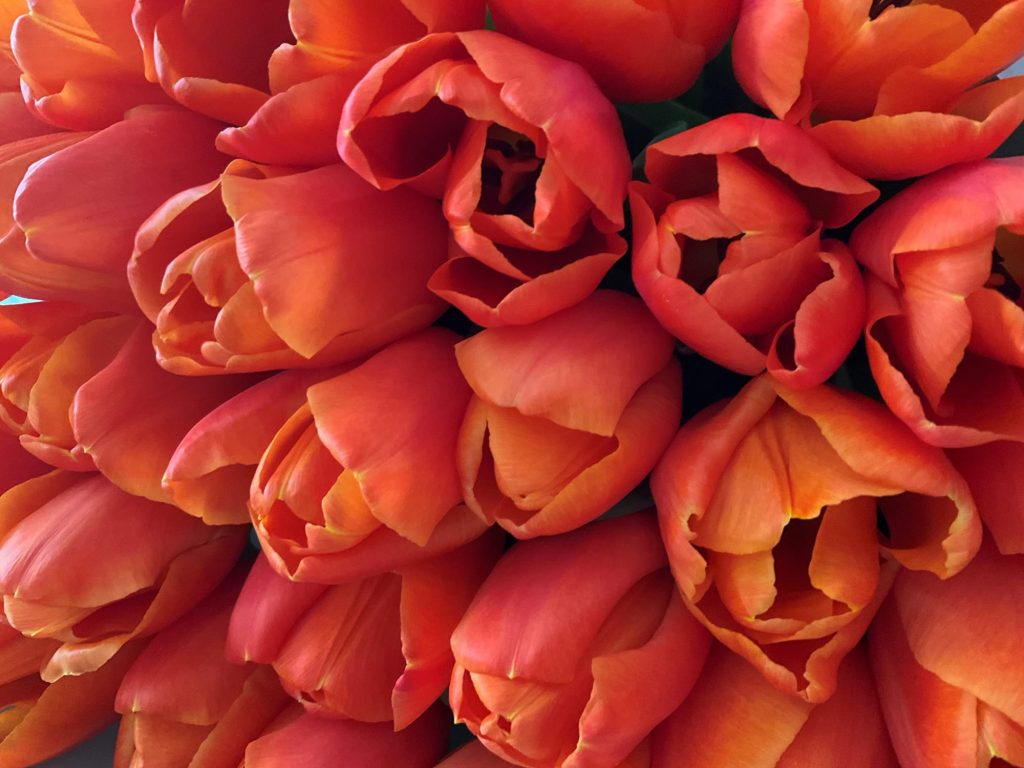
Profile of the mother’s reaction
The mother is not a direct participant in this situation. Therefore, we consider her reaction, not her behavior. The mother may see this situation, for example, online. What should be an adequate and healthy reaction from the mother? Let’s figure it out.
What does the mother want? No, not flowers! The mother wants her son to be happy with a girlfriend who understands him and does not exploit his generosity and love. And what is the marker for the mother that shows her son is happy? Exactly. When he wants to give flowers to his girlfriend. When he cares for her and sees her eyes shine from that care.
When the son chooses his mother to give her flowers, this is a signal to the mother that not everything is well in the Danish kingdom, and that she, the mother, is somehow “competing” with the potential daughter‑in‑law. And this competition (for a moment) is a manifestation of a violation of the healthy profile of perception of adult life. Because an adult builds his own relationship, his own family, his own home — independently and separately, where the foundation of the relationship is himself and his partner. The mother and father remain loving parents and live their own lives, helping their adult children when possible and desired, maintaining respect, being proud, and grateful for attention. And flowers, in this format, are not attention. They are a game of pomp, a “demonstration of priority,” and an unfortunate step in any direction of family relationships.
In other words, after the son chooses his mother and gives her flowers, a logical question should come from the mother: “Son… why so?” Because yes, he certainly loves his mother, respects her, does not want to offend her. But he can give flowers to his mother too. At any time. And it should not be the case that he remembers flowers for his mother only when someone offers them to him on the street. Do you agree?
As you can see, the matter is not about the bouquet. It is deeper. It is about the state of the relationship, fundamental priorities, and angles of perception. Life often throws manipulations at us. However, rejoice in the opportunities to act as your heart tells you! Stay strong!