Profiling: a conversation with the director of the educational complex “Prestige,” Tetiana Yevtukhova, about education during the war
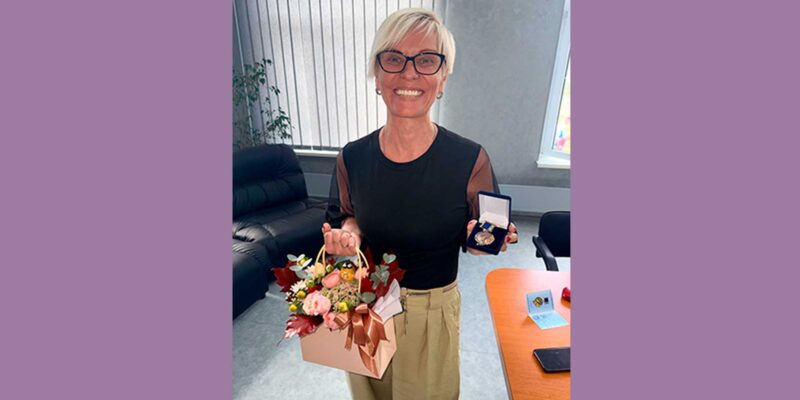
And today I present to you a very special person — a Woman with a capital letter: profound, intelligent, strong, modern, light, responsible, and beautiful — all at once! Tetiana is defending her doctoral dissertation, a leader, a top manager, a technical specialist, a professional in her field, a teacher, a mother, the director of an educational institution, a wonderful friend, and an incredibly interesting conversationalist. But everything in order.
Profile: systematic, with a technical (mathematical) mindset. Decisions are well‑considered. Communicative and objective. Yet inconvenient and cautious. Strong‑willed. Ambitious. Knows her worth and has a kind heart. Seeks compromises, having at the core of her personality a backbone of rules and order.
Focused on development — as a way of growth over oneself. A professional, ready for unexpected and rapid innovations and combined restructurings. Strives to use new projects that develop and give impetus to the creativity of children, teachers, and even parents. Highly competitive. Dynamic. Independent. Refined. A reliable business partner. Not inclined to stop at what has been achieved.
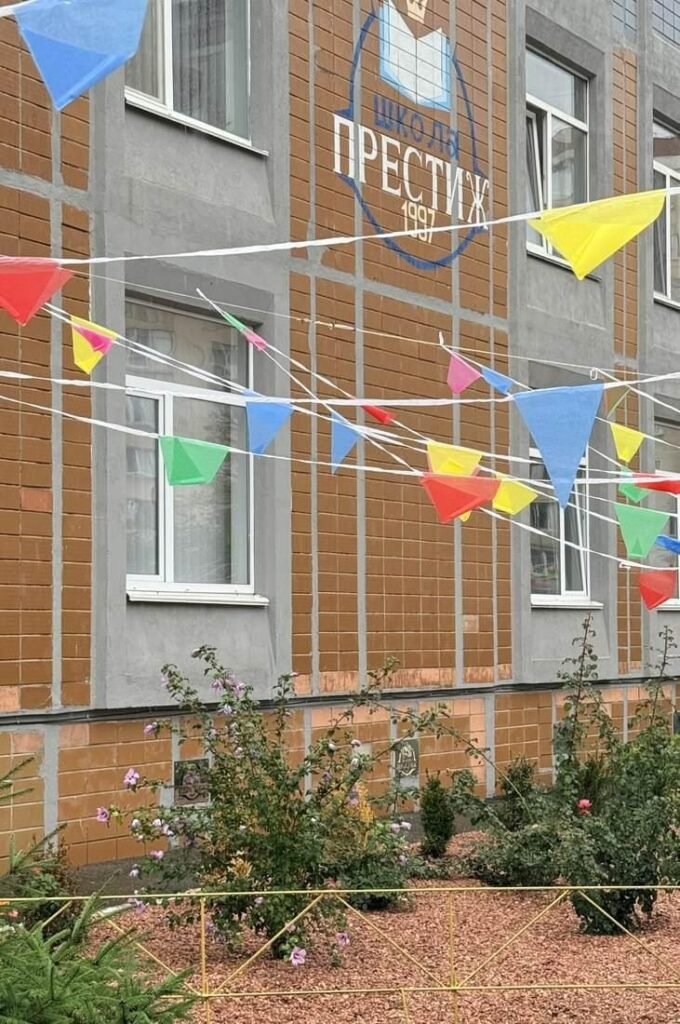
Education has always been a conversation about the future. But today this conversation with Tetiana has gained special significance. The horrors surrounding us on the streets, the war, the psychological burden… What kind of people will our children grow up to be? Will they be able to think independently, responsibly, and choose their path, preserve humanity and build a strong Ukraine? About the role of a modern educational institution that stands firm, the responsibility of adults, books, tablets, moral values — my conversation today with the director of the institution NVC “Prestige,” Tetiana Yevtukhova.
— Good afternoon, Tetiana. Thank you for meeting! I very much want the readers of Family Affairs to reflect together with us — why does education have such great importance today?
— Good afternoon, Ms. Alisa, thank you for the question and for this conversation. I think about this issue every day. And I understand that every lesson is a part of the future that we are already creating today. When a child learns to analyze information, to argue a point of view, to cooperate, to take responsibility for their own decisions, they are preparing not only for exams. They are preparing for life.
Education gives a child much more than we realize, especially now, during the war. It both teaches and, however sad it may sound, distracts from fears. Education and knowledge form an inner support (and right now it is simply indispensable), help to understand oneself, to see one’s own possibilities and to realize responsibility toward others. The values we instill today determine what our society will be tomorrow. Think carefully about every word — we are shaping our future and the future of our children!
— How do you see truly high‑quality education? Please outline a conditional Profile of a child with education appropriate to modern times.
— Quality education begins where the child is seen as a personality. Not as a component of a list of students in a journal, an average grade, or a task performer, but as a Human Being with their own character, pace of development, abilities, dreams, and questions. Profile: they are free to express desires and thoughts — and they are heard. Energetic and brave. If they cannot learn something — they explain why and then study twice as much on their own, understanding that they are investing in themselves, building themselves. They care about their safety and health (their own and that of others) — because they are taught to understand the key: the role of these components and their significance in life. They have an idea of all key spheres of life, they care/are interested, act responsibly, and respect their parents. These are not just words — this is substance. This is a process with a holistic result. This is a continuous process offline, online, at home (the school is constantly in touch in chats, class teachers are always ready to help).
Knowledge remains important, but in addition, a modern child needs to learn how to use it: to find information, verify it, see cause‑and‑effect relationships, formulate their own position, and make decisions.
For me, the indicator of quality is not only how much a child has memorized, but also whether they know how to think, whether they are not afraid to ask questions, and whether they are able to apply what they have learned in real life.
— What is the main mission of NVC “Prestige”?
— Our mission is to help every child discover themselves, feel their strengths, and receive an education that opens opportunities.
NVC “Prestige” unites the preschool department, primary school, middle and high school (and later also specialized education). Thanks to this, we can see the child’s educational path as a whole: from the first discoveries to the conscious choice of a future profession.
We strive to create an environment in which the child feels: their opinion matters, their abilities are noticed, and there are adults nearby ready to support and help them move forward.
— Has the role of the teacher in the modern school changed? How does the war affect it?
— Certainly. Today, the teacher is no longer the sole source of information. Children have access to an enormous amount of knowledge, but they need a person who will teach them how to navigate this space.
A modern teacher helps distinguish facts from manipulations, ask precise questions, debate with respect, seek solutions, and take responsibility for their choices. They create conditions in which the child gradually becomes independent.
At the same time, the teacher remains a person who can inspire. Sometimes one timely phrase, one conversation, or one act of support can change a child’s attitude toward themselves and their future.
The war has a very strong impact. It breaks us adults morally, and what can we say about children? They go to school sleep‑deprived, they are inattentive because they are exhausted, they are small — yet they live in smoke, pollution, dirt after shelling, and constant tension of “run, because it’s an alarm.” Our teachers try to soften this, distract them, tell something interesting. We do everything to keep their mental state stable. Because healthy children are our life.
The role of the teacher has become significantly analytical: how to structure breaks so that children have time to eat (or feed them in shelters), how to help them plan preparation for lessons. Functions have increased — versions updated and constantly active, working at maximum — yet safety remains the top priority.
— What do children need most from adults today?
— Children need honesty, attention, and a sense of safety. They must know that they can talk about their thoughts, fears, and difficulties and be heard.
Modern Ukrainian children grow up faster than we would like. They experience events that require great inner strength. Therefore, school must provide not only knowledge but also stability, support, clear rules, and faith that the future exists and can be created through their own actions.
Our task is not to take away all difficulties from children. We must teach them to overcome challenging situations, to ask for help (when it is truly necessary), to recover after failures, and to maintain respect for themselves and others.
When a child is constantly taught only to obey, it is difficult for them to grow into a person capable of making conscious choices. That is why we must give children the opportunity to express themselves, propose ideas, participate in joint decisions, and see the consequences of their actions.
Listening to a child does not mean agreeing with every desire. It means taking their thoughts and feelings seriously, engaging in dialogue, explaining boundaries, and gradually shaping responsibility.
A child who is heard learns to hear others.
— What place do values hold in school education?
— Values are manifested not in solemn phrases, but in everyday actions. In how a teacher speaks to a child. How does the class react to someone else’s mistake? How do we resolve conflicts? How do we treat those who are different from us? Dialogues, minute‑by‑minute work.
At school, a child learns not only mathematics, languages, or history. They daily absorb models of interaction with people. That is why it is important for us to build a culture of respect, dignity, responsibility, mutual assistance, and academic integrity.
We strive for our students to be educated people and at the same time remain sensitive, decent, and caring.
Respect is the foundation of relationships and the formula for success in future life. That is why we pay focused attention specifically to the issue of respect for one another.
— What role do parents play in this educational process built in such a way?
— Family and school must be partners. When a child sees mutual respect between parents and teachers, they feel more confident and understand that adults act for their development.
Partnership does not mean that we always look at the situation in the same way. It means readiness to talk, to listen, to seek solutions, and to remember the common goal.
Parents’ trust is a great value and at the same time a great responsibility. After all, we are entrusted not only with the child’s education but also with an important and significant part of their life — childhood!
— What kind of graduates does NVC “Prestige” have?
— These are strong‑willed young people who know their strengths, can think, work with information, and take responsibility for decisions. They know who they want to be and why. They are aware of their social role and responsibility. Teenagers who respect their own culture, speak languages, understand the world, and are ready to learn throughout life. We devote a great deal of time to this. We respect their choice, and we are by their side.
I want our graduates not to be afraid to set big goals for themselves. That success for them would be measured not only by personal achievements but also by the benefit they can bring to others.
And most importantly — that when leaving school, they preserve dignity, humanity, and faith in their own strength. And ours are exactly like that, and we are proud of them!
— What would you like to emphasize for families who are choosing a school for their child today?
— Choose not only the curriculum or the list of subjects. Feel the atmosphere of the institution. Look at how adults talk to children, whether they respect their personality, whether they support initiative, whether they help.
School years shape not only knowledge. They influence a child’s self‑esteem, their attitude toward people, their readiness to act and to trust the world.
We are aware of this responsibility. Every day we work so that our children have strong roots, powerful wings, purpose, endurance, and confidence in their own future.
Because the future does not begin someday. It is already sitting today at a school desk, asking questions, seeking answers, and attentively looking at us, the adults.
And this future is in our hands.
Profile of the parents of NVC “Prestige”: strong people who understand that education, the child’s environment, the attitude toward them as a personality, and respect within the institution where they are — have key importance.
Their child grows beyond themselves and discovers their talents. And the parents — support precisely this pace and direction. They understand that the institution and environment are a protected path toward self‑understanding and an opportunity for the child to hear themselves amid the difficult times and external noise of today. They support learning with innovative content, an enhanced program, and foreign languages. The look into the future happens every day. And each child’s step becomes stronger and more confident.
— Tetiana, what innovations are interesting in your institution? Digitalization? Do they make working with children easier?
— For us, “innovation” is not “a new device for the sake of the device itself.” It must answer a specific question: what will help the child better understand the material, maintain interest in learning, receive feedback, and continue working even when a regular lesson is interrupted by an air raid alarm.
We use digital educational platforms, interactive tasks, interactive boards, electronic materials, graphic tablets, online consultations, and learning chats. This allows us to combine in‑person and distance learning, quickly provide materials, maintain communication with children and parents, and also see where a child needs additional explanation.
Digital tools help account for different learning paces. One student may return to the material again, another may complete a more complex task, and the teacher gains the ability to offer each one an appropriate level of support. For children who find it difficult to answer in front of the whole class, the digital format sometimes becomes the first safe step toward active participation.
We pay special attention to working with artificial intelligence. Children must understand that it can help find an idea, structure material, or see another way of solving a task, but it should not think instead of them. We teach them to check the answers they receive, compare sources, notice mistakes, and preserve the authorship of their own thought.
Does digitalization make working with children easier? I would say it makes it more flexible and precise. At the same time, technologies do not replace the teacher and do not relieve them of responsibility. On the contrary, the teacher must more carefully select tools, protect personal data, control information load, and ensure that the screen does not replace live communication.
If we only replaced a paper textbook with a screen, that is not yet innovation. Innovation begins when technology helps a child think better, create more, interact more confidently, and gradually become independent. For example, we have the ability to choose menus, electronically mark whether they managed to eat before/after an alarm, and control many processes.
— If the bombing is heavy, what formats of learning do you choose? How do children react? How is online learning structured?
— In such moments, the first decision is always safety. During an air raid alarm, learning stops, and children and teachers move to a safe place. We do not require a child to immediately connect to the lesson, turn on the camera, or complete tasks while in shelter. First, they must make sure that they and their family are safe.
After especially difficult nights, we also take into account the condition of the children. Some come to class exhausted, some find it hard to concentrate, some become silent, anxious, or, on the contrary, overly active. The teacher must see in such behavior not laziness or lack of discipline, but a possible reaction to stress.
Depending on the situation, we combine synchronous and asynchronous learning. If possible, we hold short online meetings with explanations of key material. If the connection is unstable, there is no electricity, or the child needs more time to recover, they receive materials, a clear work algorithm, and the opportunity to complete the task later.
An online lesson should not be an exact copy of a regular class in front of the screen. It requires shorter content blocks, clear instructions, changes of activity, breaks, and constant feedback. Learning materials must be available for review, and the child must know whom to turn to if something was not understood or was missed.
Class teachers maintain contact with families, help coordinate learning, and inform other teachers if a child is temporarily unable to work at their usual pace. For us, it is important to preserve educational continuity, but not to turn learning into an additional source of fear and guilt.
Missed material can be explained later. A child’s psychological safety cannot be postponed.
— Tell us, what unusual things are there in your institution? Perhaps trainings or inviting interesting guests? Do you plan to do this?
— A lesson does not always begin with a bell and a textbook. Sometimes it begins with an honest conversation, an unexpected question, or a meeting with a person whose experience makes you look differently at your own life.
That is why we invite people to school who are ready to talk with children not only about victories but also about the path to them: daily work, difficult decisions, doubts, mistakes, defeats, and the ability to start again. For us, the loud name of a guest is not important, but what the child understands after this meeting and what question they ask themselves.
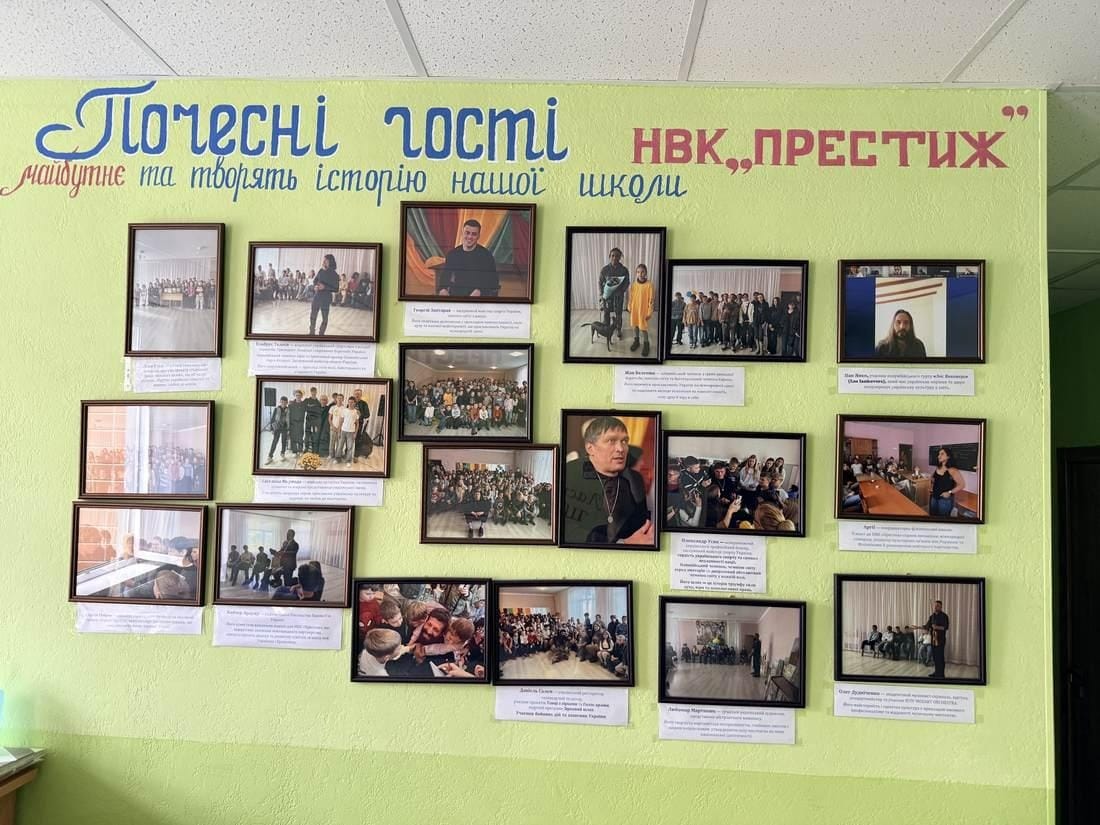
Our students have had the opportunity to communicate with Oleksandr Usyk, Elbrus Tedeyev, Zhan Beleniuk, Heorhiy Zantaraya, Daniel Salem, Yuliia Kozachkova, Svitlana Myrvoda, Oleh Dudnychenko, Sviatoslav Yurash, Kaiser Araujo, Serhiy Rebrov, Liliia Hudz, Pan Yanko, Liubomyr Martyniuk — and with you, Alisa, too. Each of them brought to school not a ready‑made formula for success, but their own life story — honest, difficult, and real.
And we also organize an autumn fair, contests, shows, exhibitions of children’s crafts, and plan to do many other interesting things!
Thank you, Tetiana, for your work! Wishing you inspiration and well‑being! Let’s hold on!