Profiling: a conversation with prominent art historian and renowned Ukrainian artist Oleksii Ovcharenko about his unique creativity and the future of Ukrainian art
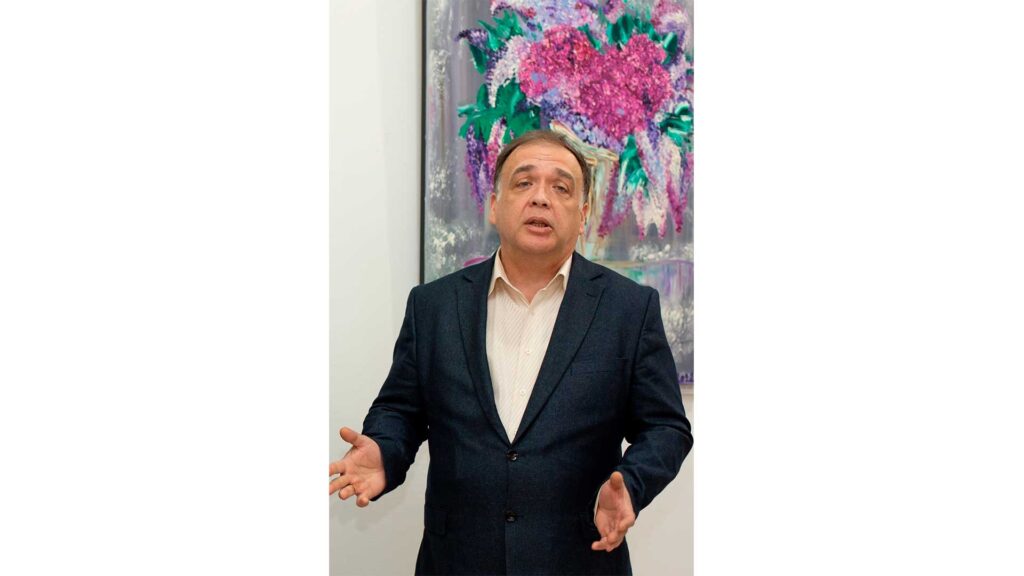
Today I introduce to the readers of Family Affairs Oleksii Ovcharenko — an Artist with a capital “A,” an art historian, sculptor, PhD in art studies, awarded with numerous distinctions, including the NSHU medal “For Creative Achievements” and the Order of Saint Nicholas the Wonderworker from Metropolitan Epiphanius of Kyiv and All Ukraine.
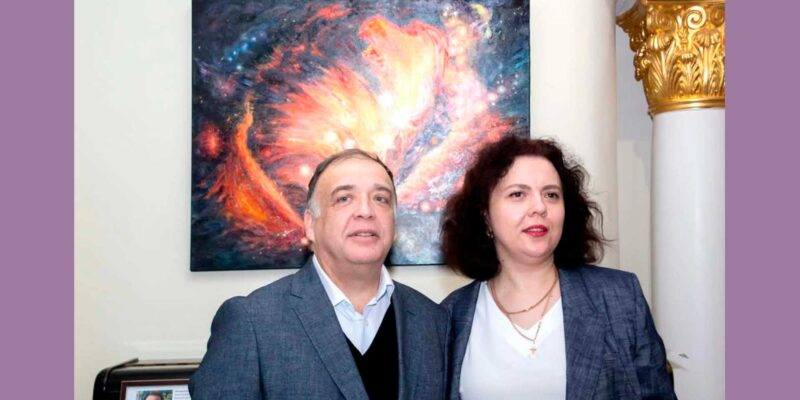
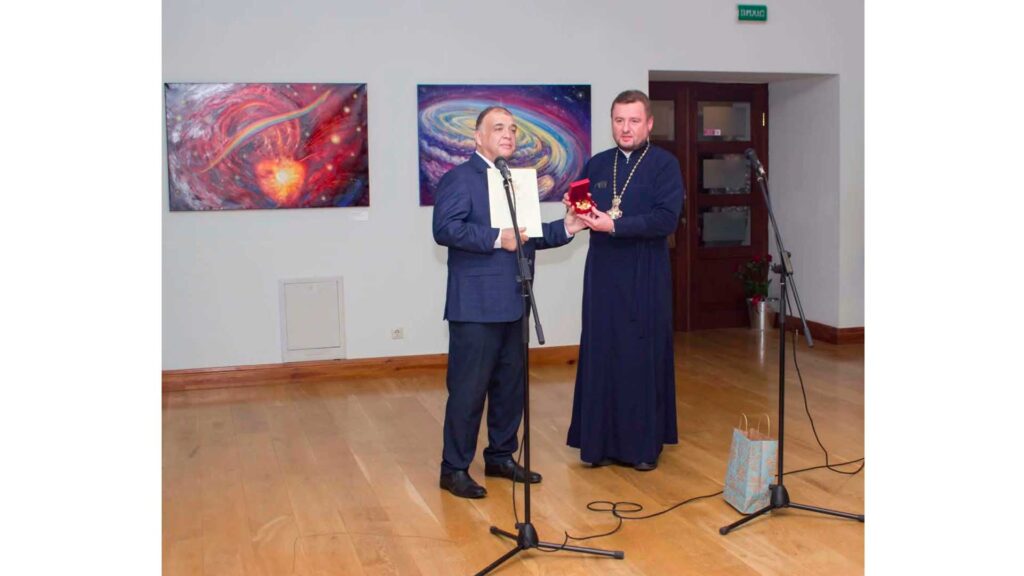
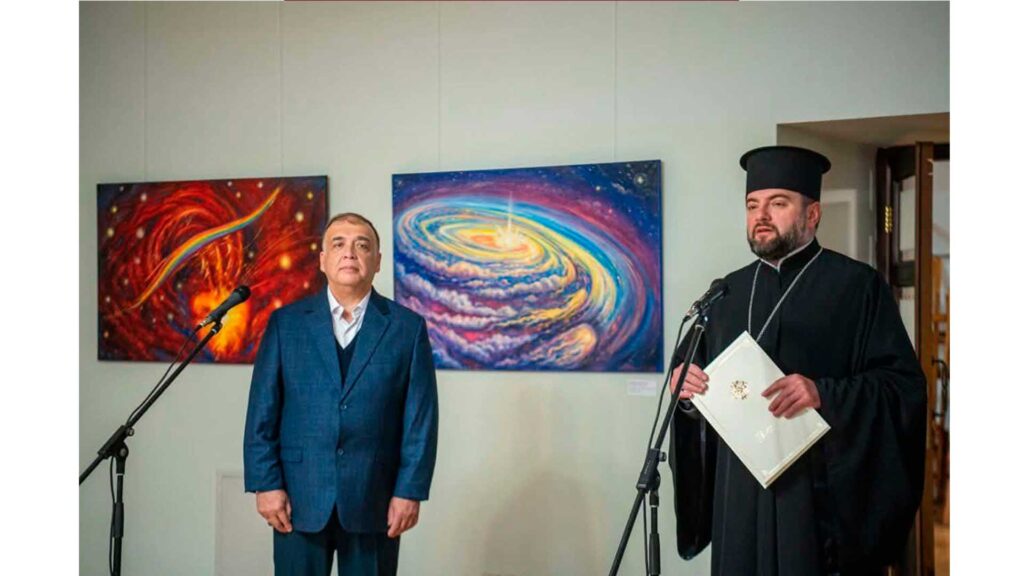
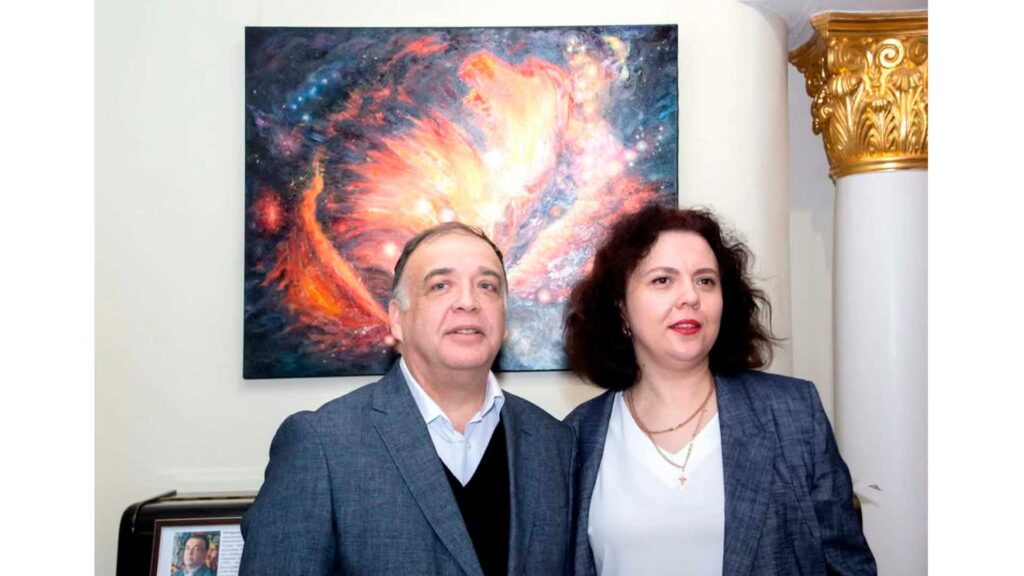
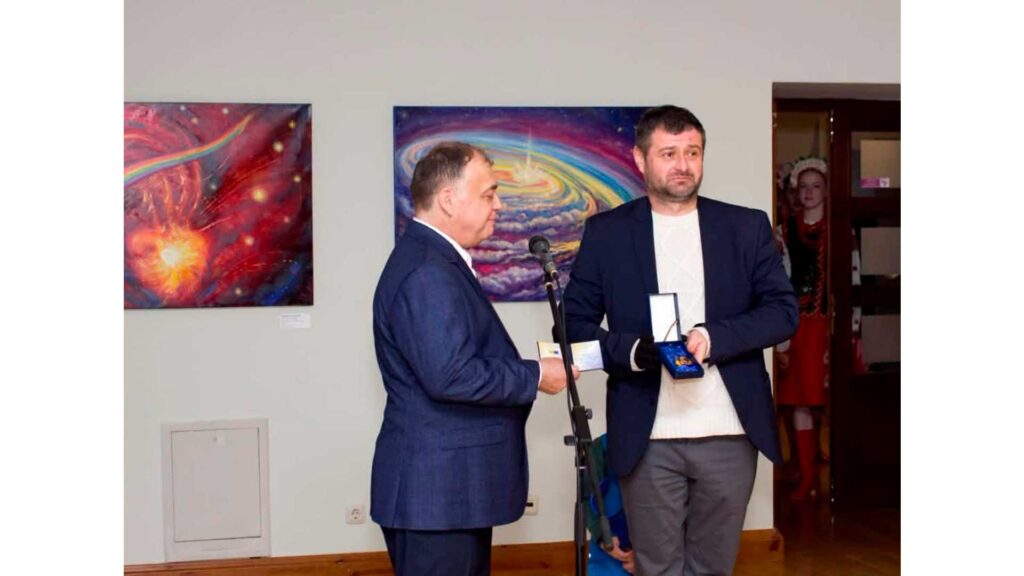
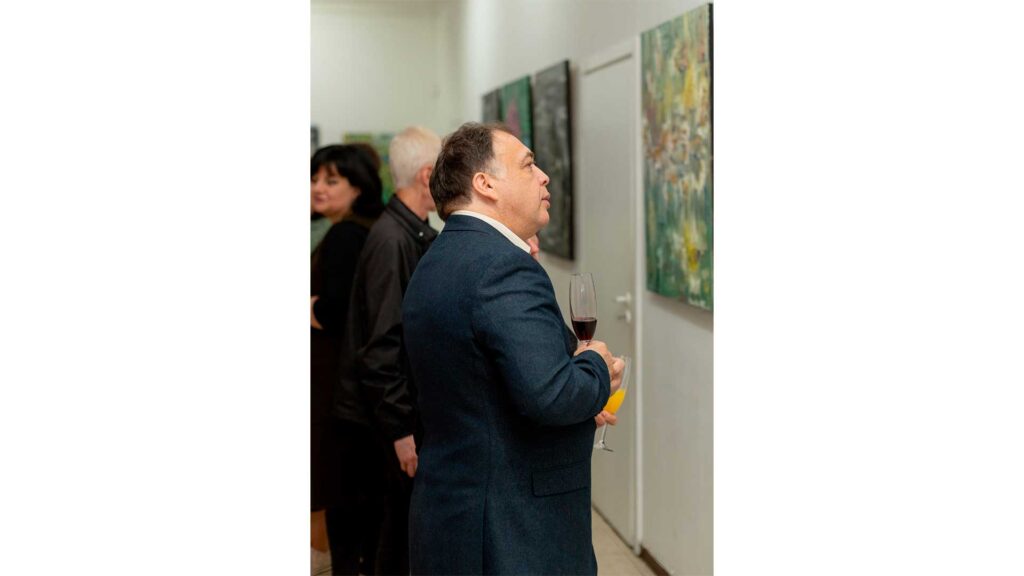
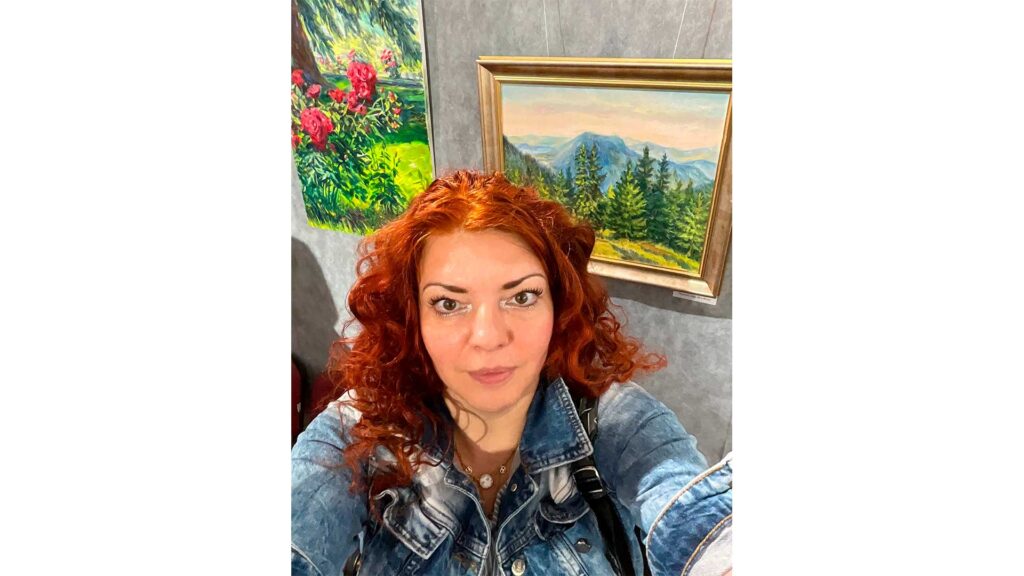
My acquaintance with this incredibly talented, professional, and kind person took place at the “Artist” gallery in 2023 (the photo below is from that very event) during my first solo exhibition and my debut in contemporary art. I was deeply nervous and anxious — seeing an art historian of such stature reminded me that I was only a hobby‑artist and subconsciously expected criticism. Yet Oleksii was polite and supportive! Thank you, Oleksii, for your encouragement and for this interview.
Profile:
Reserved and competent at the highest level of expertise in his field. A practitioner, systematic, straightforward, and always attentive to detail. A strong personality. Compassionate and an engaging conversationalist.
A gifted orator, he simplifies complex ideas so they become accessible and clear to anyone listening.
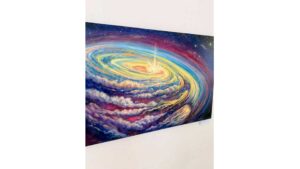
As an artist, he subconsciously travels within each of his paintings and allows the viewer to do the same, especially in works of cosmic content. A dreamer. An intellectual. He approaches his talent and education with humility, emphasizing respect for every person around him. He has a subtle and tactful sense of humor. Very easy to communicate with.
He has an inclination to write stories and novels (a hereditary trait). Possesses strong pedagogical skills and simultaneously has the talent to convey information in such a way that people themselves wish to absorb it. Honest, reliable, and kind‑hearted. Very diligent and persevering. Values what he has here and now.
— Thank you, Oleksii, for finding the time to talk! So, the first question: how did it all begin? Why art?
— I was born into the family of sculptor Illia Ovcharenko, so from early childhood I was surrounded by art. Even before I could read, I loved browsing through my father’s library, which consisted of multivolume historical works (he was a historian by one of his higher educations), Ukrainian classical literature, and art publications. I have been drawing since the very moment of self‑awareness, for as long as I can remember. At first, these were whirlwind‑like scribbles, but very expressive. Everything that came into my hands became a canvas for my “creativity.” I could decorate a pillow, a hot‑water bottle, or a tablecloth in seconds. I also “illustrated” books I could reach, though the scientific and encyclopedic volumes were spared. In our family, art was cherished as the defining pursuit of life.
At the age of three, I immediately drew a composition: a dog near its kennel, with a bowl and a bone beside it. In other words, I moved into figurative drawing. Later I studied at an art school and then at the Luhansk Art College, which I completed as a painter. After that came the Kyiv State Art Institute and the Department of Art History.
My father passed away when I was twelve, so he could no longer support me. All the main responsibilities fell on my mother’s shoulders. Yet my father’s name sustained me. He was a renowned sculptor — a laureate of the Shevchenko Prize.
— Oh, how fascinating! Who supported you, and how did that influence your creative development and help you become strong?
— Of course, there were difficulties in my studies, but my interest in theoretical and historical questions always helped me. There I searched for and found answers, learning to analyze both my own path with its challenges and the world around me. An important milestone was the beginning of my teaching career. It required a completely different level of work on myself and my knowledge. I began teaching art history and other visual disciplines starting in 1985.
— What was the hardest part on the way to your current recognition as a well‑known figure in the art world, and what, on the contrary, came easily?
— In the artistic profession, nothing is particularly easy, but there is a state of creative realization that compensates for all difficulties and provides a very high quality of life in the moments of fulfilling an idea with complete dedication.
Art is the only sphere of life capable of harmonizing and strengthening the integrity of a person, though not always, for various reasons, does it achieve this.
As for me personally, life has almost always tempered me and continues to do so. To be strong, one must see the goal and not lose inner tone. This is not a simple, but an interconnected task. Inner tone is maintained, in particular, by awareness of the goal. The artist’s goal is to approach the aesthetic absolute. And before the absolute, all difficulties ultimately become secondary. In this confrontation, the strength of personality is tested — its ability to conduct through itself a high “artistic voltage.”
— Which classical and contemporary artists are your favorites? Why? What do you find special in them?
— I don’t have a clearly defined pantheon of “classical and contemporary artists.” There are many interesting and original masters. When they reach true originality, they become “classical.” That is why I look more closely into the classics. Yet classics must remain relevant, resonating with the perception of people living here and now.
I am very interested in Rembrandt. In his art he almost exemplarily realized all the key transformations of a creative personality — from the excitement of early hopes and successes to the awareness of the profound laws of existence, which require no external brilliance but reveal the source of inner light. This serves as a certain criterion for evaluating any work and any artist.
— Tell us the most touching story of artistic life during the war.
— Everything happening now, connected with the war, significantly changes long‑established perceptions. For me, what is moving is the immense interest of the broad Ukrainian public and the cultural community in art in its various forms, despite the harsh circumstances. I am touched by how the modern viewer seeks inner support in art. This speaks of the deep calling of art to provide, through visible images, support for our spiritual dimension.
— You work as a sculptor — tell us how this process unfolds, how much time it takes, how much it costs, and how much effort it requires.
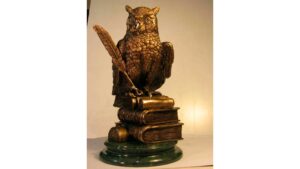
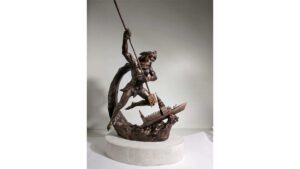
— Sculpture is a rather complex and technologically multi‑stage art form, the essence of which lies in interaction with a specific material. I mainly work with bronze and wood. Each of them has its own unique character and energy. Much also depends on the author, who can see in the material what others do not. The content of the idea submits to the material, and the material to the content, and ideally they merge into an organic, inseparable whole.
Sculpture is heavy physical and psychological strain at the maximum of one’s abilities, which can last for months. Some of my works took more than two years of constant, persistent labor. Materials are expensive, often specific and energy‑intensive, requiring a significant amount of high‑quality professional tools.
Currently I devote more time to painting, which is no less powerful in expression than sculpture, but technologically simpler. Yet some ideas I see exclusively in sculptural embodiment.
— How many and what kind of solo exhibitions have you held?
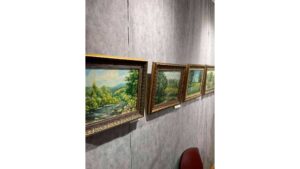
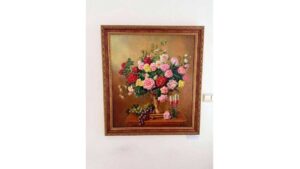
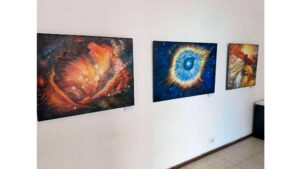
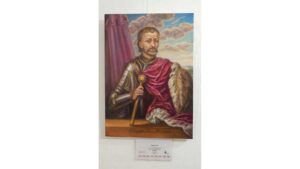
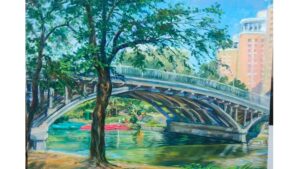
— I have held six solo and about fifty group exhibitions. In them I touch upon the theme of the Ukrainian landscape, turn to historical subjects and portraiture (including historical portrait reconstruction), floral still life, and the theme of cosmic space in its abstracted and metaphorically interpreted forms.
At my latest solo exhibition “Gravity of Meanings,” I to some extent synthesized these genres in a large canvas “Happy Moment” (160×220 cm). It combined a seascape with a cosmic vortex in the collision of galaxies and sails.
— Share a few secrets of the profession of an art historian. Readers will be very interested!
— About art history? The main and perhaps most difficult aspect is correct art‑historical analysis, which relies on direct examination and meaningful interpretation of formal means of expression. On the other hand, one must take into account the historical and cultural context as a kind of system of psychological and value coordinates that constantly changes. The fuller and more reliably sustained this analysis is, the higher the quality of information obtained. The difficulty also lies in the fact that in art everything is form and everything is content; they can be separated only conditionally. Art history teaches us to see and aesthetically enjoy this duality, the constant flow of content into form and form into content.
— At one of your wonderful solo exhibitions “Gravity of Meanings,” which you just mentioned, held in the summer of 2026 at the “Artist” gallery in Kyiv, I heard a visitor say “he conveys spirituality incredibly.” Do you conduct seminars for admirers of your art? Meetings with art lovers?
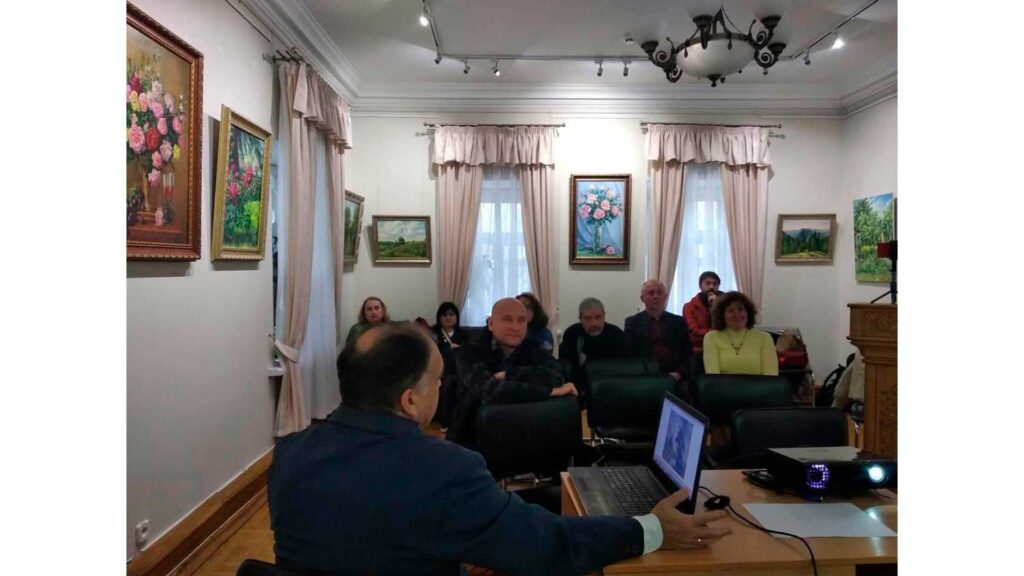
— At each of my solo exhibitions I conduct author’s tours, open lectures, and discussion meetings.
— Tell us about teaching art history at the university. What do you emphasize most? How many years have you been teaching?
— I have been teaching for more than forty years. In my lectures I emphasize criteria of value — why a particular artistic phenomenon is valuable, and what in this value is temporary and fleeting, and what can remain stable over time.
— Do you observe the emergence of new, purely Ukrainian styles in art during the war?
— We live in a period of stylistic total eclecticism and fragmentation. At present one can speak only of individual style, and even then cautiously. But every significant historical stage generates a new worldview, a new understanding of all things, and from this arises new expression and style.
One can say there are three directions in which the artistic process unfolds: symbolic‑allegorical works that broadly reflect the contemporary struggle; documentary‑realistic, educational works; and relaxation‑hedonistic pieces that allow one to distract from tension and switch emotionally.
Now not only is the potential viewer active. Artists too are actively seeking adequate approaches to what cannot be fully comprehended. A new stylistic language is forming, but it will fully manifest in a few years.
— Who among young people is more interested in art now — girls or boys?
— This is not a very simple question, but it has a purely statistical answer. At exhibitions, art events, and among students of art universities, there are more women, but among well‑known masters the balance is somewhat different. It should also be noted that in Ukraine women have traditionally, since ancient times, occupied and continue to occupy an independent, honorable place. And this influences attitudes toward art. In general, I am not inclined to strongly oppose genders. The difference certainly exists, but in the aesthetic sphere it does not have an unambiguous character.
— How can culture be preserved in today’s realities — with war and gadgets (children in TikTok and on the internet rather than at exhibitions)? What must be done so that children feel Ukrainian culture and take greater interest in it?
— First, Ukrainian culture requires inner work from each of us as a guarantee of truly free and dignified life, overcoming various post‑colonial phenomena. Second, a real understanding that culture is a value‑based compass which ultimately determines everything else — the quality of thoughts, feelings, and actions. Winston Churchill’s famous saying explains this very well. For Ukrainian culture to be popular, everyone must make their possible contribution.
— What is your main forecast, as an expert, regarding the future of Ukrainian art?
— I believe Ukrainian art has brilliant prospects. It will embody, in diverse and artistically vivid images, the spirit of our Victory and the overcoming of the consequences of the past in our history. Ukrainian art will gradually rise to leadership on all the most influential international art platforms.
Thank you, Oleksii, for this incredible creative conversation! Let’s stay strong!